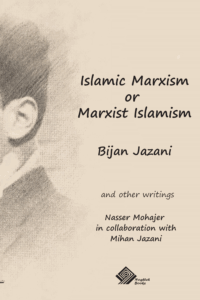
 Islamic Marxism or Marxist Islamism
and other writings
Bijan Jazani
Compiled and edited: Nasser Mohajer
Cover Design: and layout: Banafsheh Massoudi
First Edition, Paris, Spring 2025
ISBN: 978-0-9980861-9-4
Islamic Marxism or Marxist Islamism
and other writings
Bijan Jazani
Compiled and edited: Nasser Mohajer
Cover Design: and layout: Banafsheh Massoudi
First Edition, Paris, Spring 2025
ISBN: 978-0-9980861-9-4

 Fada’i Guerrilla Praxis in Iran
(1970–1979)
Narratives and Reflections on Everyday Life
Edited by
Touraj Atabaki
Nasser Mohajer
Siavush Randjbar-Daemi
A catalogue record for this book is available from the British Library.
A catalog record for this book is available from the Library of Congress.
ISBN: HB: 978-1-7883-1468-8
PB: 978-0-7556-5127-6
ePDF: 978-0-7556-3886-4
eBook: 978-0-7556-3887-1
Typeset by Newgen KnowledgeWorks Pvt. Ltd., Chennai, India
To find out more about our authors and books visit www.bloomsbury.com
Visit the Publisher’s website [Bloomsbery]


Nasser Mohajer speaking before a full house at Revolution Books on July 7, 2023 about his book Voices of a Massacre: Untold Stories of Life and Death in Iran, 1988. The event was co-sponsored by the International Emergency Campaign to Free Iran’s Prisoners Now.
Date: July 7, 2023
Voices of a Massacre speaks deeply to the nature of the Iranian regime and to the current moment when the courageous mass uprising in Iran, which was sparked by the September 2022 murder of Mahsa Amini for “improper hijab,” is facing extreme repression, including torture, secret trials, and executions.
Nasser Mohajer is an independent scholar of modern Iranian history, author of many books and articles on contemporary Iran, including on the prison systems, the women’s movements for equal rights and histories of the Iranian left. He currently resides in Paris.
The International Emergency Campaign to Free Iran’s Political Prisoners Now was a co-sponsor of this event.
 Mahnaz Matine – Nasser Mohajer
The National Organization of Iranian Women (NOIW), established in January 1965 in close association with the Confederation of Iranian Students, was the first organization founded by Iranian women abroad. The organization did not remain active for long and by the end of the 1960s had all but dissolved.
Research into the history of the first Iranian women’s organization abroad sheds light on the attitude and approach toward the question of women, by an important segment of the leftist and democratic forces that participated in the process. This attitude that evolved in the 1960’s largely informed the disposition adopted by the leftist forces on the women’s issue in the following decades, the consequences of which became apparent especially after the 1979 Revolution.
This book consists of three chapters. The first chapter delves into the origins and the formation of the NOIW, examines the intellectual leanings and ideals of its founders, explores the interplay between the NOIW and the Confederation of Iranian Students, and highlights the achievements of the organization and the problems and obstacles that led to its premature demise. Chapter 2 recounts conversations with several leaders and members of the NOIW, as well as with Majid Zarbakhsh, one of the secretaries of the Confederation who was the principal liaison on behalf of the Confederation with the NOIW. The third chapter is a selection of documents that helps the reader to better understand the rise and fall of the National Organization of Women of Iran.
Batoul Arasteh, Noghteh Books, 2022
 The book interweaves scattered fragments of the life of an urban Iranian woman who, in her youth, is exposed to social justice and democratic ideals, and as a young woman participates in the mass uprisings that culminated in the 1979 Iranian revolution. She joins a leftist political organization as part of the greater revolutionary movement. After Islamic hardliners consolidate their power and unleash a campaign of terror against an array of opposition forces, like thousands of others, she goes underground. As intense state crackdown leads to the disintegration of her political organization, she sees no option but to flee the country. She has to leave her toddler behind, as smugglers lead her, along with her husband and her three-year-old daughter through the treacherous mountains of Kurdistan and into Turkey. After a journey through several European countries, they finally arrive in France where they seek political asylum. And eventually, she’s reunited with her youngest daughter in France.
The author does not delve too much into the details of her political activism in the Islamic Republic of Iran and the organization to which she belonged. Her narrative focuses more on her “inescapable escape” from Iran and the trials and tribulations as an exile including the loss of her mother, father, and a close friend.

 And Still Lives Our Story (Memories of an Iranian Political Prisoner)
Hassan Darvish has recounted his prison memoirs in a creative and unclassical way. He was imprisoned by the Islamic Republic of Iran from 1982 to 1984 in “Vakil Abad” and the “Central Committee” detention center in the city of Mashad. While detailing his ordeal in prison, he also writes about his life before and after imprisonment.
 Poppy Fields is concerned with the Struggle of Kurdish women from Iranian Kurdistan during the years following the Iranian Revolution of 1979. Narrated by Goli Ghobadi, one of the first Kurdish women who joined the Movement against the state authorities of the Islamic Republic of Iran, Goli Ghobadi depicts the oppression faced by Kurdish women as well as the evolution of their struggle. The book vividly depicts the challenges of everyday life and the agency of Kurdish women who fought on different fronts and against all kinds of subjugation. Goli Ghobadi also demonstrates how women’s participation in the movement weakened obsolete social structures, especially patriarchy, and paved the way for the formation of new ethnic and gender identities for the Kurdish women of Iran.


In Exile (Twenty-Three Iranian Short Stories) In this collection, 23 Iranian writers who accepted the call-for-entries by Nasser Mohajer, have recounted stories of life under the theocratic regime of Iran and why people were forced to leave their country and loved ones to seek political asylum in foreign lands. The life and times of political dissidents, nonconformists and non-Muslims are narrated in the labyrinth of displacement. Arranged historically, almost each story is opened with an account of the life in urban settings in Iran. The protagonists recount the horrors of adventurous escapes, frustrations of asylum seeking, as well as the harshness of life, generational battles and predicaments of displacement.

Compiled & edited by Nasser Mohajer
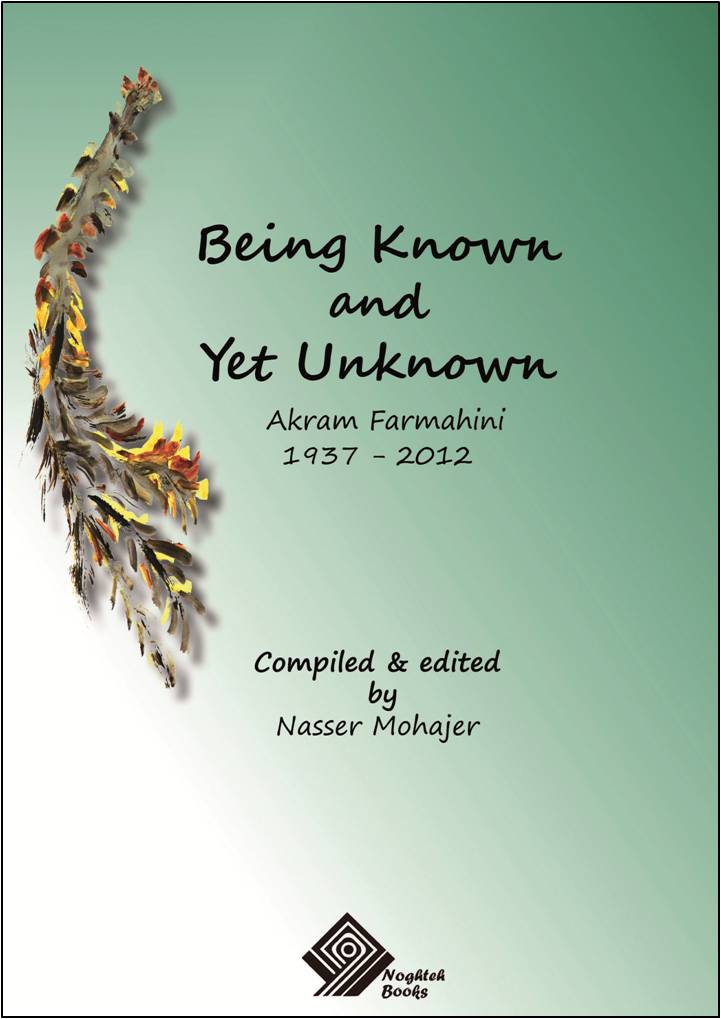 This is a collection of writings by associates, friends and a few relatives of the late Akram Farmahini who passed away in January 2012 in Paris.
Akram Farmahini, artist, painter and designer was educated in the Institute of Decorative Arts of Tehran University. She was married to Bagher Moemani, a well-known historian and public intellectual.
Being Known and Yet Unknown not only introduces the reader to the persona of a female artist, but through different narratives of her life, it depicts achievements as well as obstacles for the advancement of the educated urban middle-class women in the context of the hundred-year transformation of women’s socio-economic conditions specially during the rule of Shah Mohammad Reza Pahlavi. The last chapter of the book features a selection of Akram Faramahini’s paintings and sketches. ISBN: 978-0-9828408-7-0


Crime & Punishment (On the Assassination of Dissidents in Iran)
This book comprises two essays and one interview. The interview and one of the essays describe in great details how Parvaneh Eskandari, Daryoush Foruhar, Majid Sharif, Mohammad Mokhtari and Mohanmad Jafar Pooyandeh were butchered and murdered based on a detailed and careful examination of accessible evidence .
The other essay is an investigative inquiry into the circumstances and context of Hojjat-Al-Islam Khatami’s rise to power – during whose terms these serial assassinations occurred.
In this inquiry, the general political tendencies and domestic policies of the Reformist government of Mohammad Reza Khatami is analyzed and scrutinized.
 The pamphlet “Reviewing the Theoretical Discussions of the Women’s Movement at Conferences of the Iranian Women’s Studies Foundation” is based on Mahnaz Matin’s talk at the 30th Conference of IWSF (Florence, Italy, 2019). The conference, entitled “Three Decades of Experiences and Challenges,” was dedicated to reviewing and evaluating nearly 30 years’ experience of IWSF. This review looks at how Islamic Shari’a, the Islamic government, and its engagement in the systematic discrimination against women are discussed in these conferences. Considering the characteristics of the Iranian government in establishing the laws and determining the social relations, particularly in the case of women, under the rubric of applying sharia of Shia Islam, this evaluaon is of undeniable importance to Iran’s feminist movement. The author has reviewed and analyzed the three main trends among Iranian feminists; secular, leftist, and reformist, and explained their views.
by Mitra Hugo
The Iranians – Books, History, Human Rights
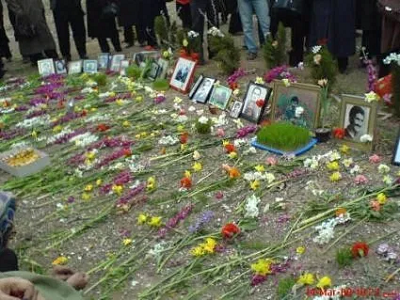 Voices of a Massacre: Untold Stories of Life and Death in Iran, 1988, edited by Nasser Mohajer, is a painstakingly compiled account of the ordeal suffered by the thousands of Iranian political prisoners who perished in the summer of 1988, including the testimonies of those who survived. It bears witness to a national tragedy.
Angela Davis, the famous African-American activist, now a professor at UC Santa Cruz, writes in the introduction to the book, “There may be those who argue that these events took place long ago and that there is little to be done today, but the fact that it has been more than thirty years since this atrocity took place is an even more compelling reason why an international solidarity movement is needed to support the demand to render the Islamic Republic of Iran accountable for past as well as ongoing acts of repression.”
The book, which took ten long years of research to complete, is divided into six chapters in which 25 eyewitnesses talk, in harrowing detail, about the massacre that took place at the end of the Iran-Iraq war, in the summer of 1988, as per a fatwa issued by Ayatollah Ruhollah Khomeini, the founder of the Islamic Republic. Declaring that he had drunk the cup of poison ending the war, Khomeini ordered a “final solution” to the plight of thousands of political prisoners who had been incarcerated for years, having undergone horrible torture and awaiting the termination of their sentences. […]
[continue reading in the original source site]
The Iranians – Books, History, Human Rights
Nov 23, 2020
 Bagher Momeni (A Political and Intellectual Life)
Vol.1
The first volume contains narratives of personal, political and intellectual life of Bagher Momeni, from the perspective of his relatives, friends and comrades. This volume begins with the selected notes from his older brother and younger sister. Then his former comrades discuss his involvement with and activism in the Tudeh Party from 1941 to 1943. His publicized arrest and detention from 1956 to 1959 are also narrated. His life following the end of his imprisonment, which was jump-started by leaving the Tudeh Party of Iran and turning his attention to historical research, translation of historical texts, literary critique, and cultural work in the final years of the 1960s, is recounted. His political activities during the short window of relative openness, from 1961 to 1964, described by his comrades, are included. We also read the story of the rise and fall of the publication Contemporary Voice (Sedaye Moaser) in addition to the written narratives of the publication’s creators. His travel to France, achievement of a doctorate degree in history, return to Iran, collaboration with several long-time and new comrades at the threshold of the Iranian Revolution, establishment of the weekly publication of Contemporary Voice, and the publication of the theoretical periodical, Thoughts (Andisheh) are recounted. His founding of the Freedom of Labor (Azadi-e Kar) group and finally his forced escape from Iran and adventures during his life in exile are also described.
ISBN: 978-0-9980861-8-7
 Bagher Momeni (A Political and Intellectual Life)
Vol. 2
The second volume contains the writings of Bagher Momeni, from his first notes dated 1942 to selected political articles that he wrote for the publications of the Tudeh Party up to the August 19, 1953 coup d’état. His accomplishments after the coup are also recounted in numerous works, including poetry, historical inquiries, translations, historical explorations, literary critiques, Islamic studies, and explorations in exile and biographies of friends – published for the first time. This volume contains a deliberate study of Bagher Momeni’s most important work, from his research work to literary critiques and political-social analysis by experts in the field. The newspaper Bistoon-e Kermanshah, which was his first printed press work, is also studied. Thoughts and the weekly Contemporary Voice publications, both cofounded by Bagher Momeni, found their way in the printed press of the country shortly after the Iranian Revolution and are also examined. This volume starts with Momeni’s views on social, political, and cultural issues of his time and ends with his bibliography.
ISBN: 978-0-9980861-8-7
This two-volume work is a homage to the intense social, intellectual and political endeavours of Bagher Momeni, one of 20th century Iran’s foremost public thinker and activist. The product of the decade-long efforts of the editor, Nasser Mohajer, who engaged in collecting a broad range of testimonies from collaborators of Momeni spanning the different eras of his presence on Iran’s public scene, these two volumes enable the reader to also gain a vivid impression of the wondrous world of the Iranian Left from the 1940s to the present day.
 The first volume contains narratives concerned with the personal, political and intellectual life of Bagher Momeni from the perspective of his relatives, friends and comrades. This volume begins with the selected notes from his older brother and younger sister. Then his former comrades discuss his involvement with and activism in the Tudeh Party from 1941 to 1953, including his incarceration between 1956 and 1959. The narrative then takes the reader through Momeni’s activities in the 1960s: from his departure from the Tudeh Party to the start of his historical research, literary criticism and cultural activities within the remit of the Seda-ye Moaser (Contemporary Voice) publishing initiative. The first volume concludes its biographical perspective by noting Momeni’s activities during the Revolution period (1977-79), and his role in several publications produced following the fall of the Shah, such as the Seda-ye Moaser weekly, Andisheh or Thought, and finally his founding of the Azadi-ye Kar, or Freedom of Labour, group before his forced exile from Iran in 1983.
The second volume contains selected writings of Momeni; from his first notes dated 1942 to political articles that he wrote for publications of the Tudeh Party until the August 19 1953 coup d’état. It starts with Momeni’s views on social, political, and cultural issues of his time and ends with a complete bibliography of his remarkable output.
His accomplishments after the coup are also referred to in numerous works, including poetry, historical investigations, translations, literary critiques, Islamic studies, inquiries produced during his exile and biographies of friends, all of which are published for the first time in the present collection. This volume also contains focused studies, conducted by specialists of various fields, of Momeni’s most important intellectual outputs. These studies span his historical and sociological research work through to his literary critiques. The newspaper Bistoon-e Kermanshah, which marked his first involvement with the printed press, is also studied, as well as the aforementioned periodicals published by Momeni after the Revolution of 1979.
This two-volume work finally includes an extended interview by the editor with Momeni, featuring his reflections on 75 years of activism, research and concern for the evolution of Iran’s society and politics, which fittingly bring this unique collection to a close.

Bagher Momeni (A Political and Intellectual Life)
Vol. 2
The second volume contains the writings of Bagher Momeni, from his first notes dated 1942 to selected political articles that he wrote for the publications of the Tudeh Party up to the August 19, 1953 coup d’état. His accomplishments after the coup are also recounted in numerous works, including poetry, historical inquiries, translations, historical explorations, literary critiques, Islamic studies, and explorations in exile and biographies of friends – published for the first time. This volume contains a deliberate study of Bagher Momeni’s most important work, from his research work to literary critiques and political-social analysis by experts in the field. The newspaper Bistoon-e Kermanshah, which was his first printed press work, is also studied. Thoughts and the weekly Contemporary Voice publications, both cofounded by Bagher Momeni, found their way in the printed press of the country shortly after the Iranian Revolution and are also examined. This volume starts with Momeni’s views on social, political, and cultural issues of his time and ends with his bibliography.
ISBN: 978-0-9980861-8-7
Bagher Momeni (A Political and Intellectual Life)
Vol. 1
The first volume contains narratives of personal, political and intellectual life of Bagher Momeni, from the perspective of his relatives, friends and comrades. This volume begins with the selected notes from his older brother and younger sister. Then his former comrades discuss his involvement with and activism in the Tudeh Party from 1941 to 1943. His publicized arrest and detention from 1956 to 1959 are also narrated. His life following the end of his imprisonment, which was jump-started by leaving the Tudeh Party of Iran and turning his attention to historical research, translation of historical texts, literary critique, and cultural work in the final years of the 1960s, is recounted. His political activities during the short window of relative openness, from 1961 to 1964, described by his comrades, are included. We also read the story of the rise and fall of the publication Contemporary Voice (Sedaye Moaser) in addition to the written narratives of the publication’s creators. His travel to France, achievement of a doctorate degree in history, return to Iran, collaboration with several long-time and new comrades at the threshold of the Iranian Revolution, establishment of the weekly publication of Contemporary Voice, and the publication of the theoretical periodical, Thoughts (Andisheh) are recounted. His founding of the Freedom of Labor (Azadi-e Kar) group and finally his forced escape from Iran and adventures during his life in exile are also described.
ISBN: 978-0-9980861-8-7

 The Road Not Taken (Narrative on the Life & Times of Iranian Feda’i Guerrillas)
Vol.1
For a careful and comprehensive study of the Organization of the Iranian People’s Feda’i Guerrillas (OIPFG) from its inception to the fall of the Shah’s regime on February 11, 1979, two well-known Iranian historians, both living in exile requested a number of ex-members of the OIPFG to record their daily life in struggle in the 1970’s. They also asked scholars and experts in social and political history, labor movement and the arts and letters to appraise the impact of the Guerilla Movement on poetry, short stories, cinema, theatre and music, prior to the Iranian Revolution of 1979.
ISBN: 978-0-9980861-2-5
 The Road Not Taken (Narrative on the Life & Times of Iranian Feda’i Guerrillas)
Vol. 2
The ties of the OIPFG with the workers movement, its organic relationship with the student movement and liaison with the prison network affiliated with the Feda’ian are narrated by both female and male members and sympathizers of the Organization. So is day to day life in the safe houses of the Fedai’s.
The editors would have wished to include a narrative on the National and Ethnic question in Iran, as well as the rapport with members of non-Muslim communities in the country. But the could not “fill this gap unfortunately”.
The long list of contributors to this two-volume work attests to the editor’s commitment to pluralism and polyphonic historiography. They did their best to give voice to a rainbow of different perspectives and narratives for the better understanding of the historical phenomena named the Feda’i Guerrillas.
ISBN: 978-0-9980861-3-2
The Road Not Taken is a narrative of the Life and times of the Organization Iranian Peoples Fedai’e Guerrillas, which came into being in 1971 and carried out armed struggle against the regime of Mohammad Reza Shah Pahlavi until its downfall in 1979.
The book is a comprehensive compilation of the narratives of former guerrillas and ex political prisoners who describe daily life in safe houses, the way in which they conducted armed operations, their engagement in political and intellectual endeavors and political entanglement groups not subscribing to guerrilla warfare. The editors of The Road Not Taken, Touraj Atabaki and Nasser Mohajer, along with other political, economic and social historians of Modern Iran and experts on literature, cinema and the arts have vividly depicted the impact of the OIPFG on the poetry, music, fiction, theater, cinema and painting of 1970s Iran as well as their influence on the working class, student movement and the intelligentsia in particular.

The Road Not Taken (Narrative on the Life & Times of Iranian Feda’i Guerrillas)
Vol.1
For a careful and comprehensive study of the Organization of the Iranian People’s Feda’i Guerrillas (OIPFG) from its inception to the fall of the Shah’s regime on February 11, 1979, two well-known Iranian historians, both living in exile requested a number of ex-members of the OIPFG to record their daily life in struggle in the 1970’s. They also asked scholars and experts in social and political history, labor movement and the arts and letters to appraise the impact of the Guerilla Movement on poetry, short stories, cinema, theatre and music, prior to the Iranian Revolution of 1979.
ISBN: 978-0-9980861-2-5
The Road Not Taken (Narrative on the Life & Times of Iranian Feda’i Guerrillas)
Vol. 2
The ties of the OIPFG with the workers movement, its organic relationship with the student movement and liaison with the prison network affiliated with the Feda’ian are narrated by both female and male members and sympathizers of the Organization. So is day to day life in the safe houses of the Fedai’s.
The editors would have wished to include a narrative on the National and Ethnic question in Iran, as well as the rapport with members of non-Muslim communities in the country. But the could not “fill this gap unfortunately”.
The long list of contributors to this two-volume work attests to the editor’s commitment to pluralism and polyphonic historiography. They did their best to give voice to a rainbow of different perspectives and narratives for the better understanding of the historical phenomena named the Feda’i Guerrillas.
ISBN: 978-0-9980861-3-2

 In the Name of Law (Bijan Jazani & Hassan Zia Zarifi in Military Court)
In the Name of Law is a case study of the arrest and trial of Bijan Jazani, Hassan Zia Zarifi and other twelve members of a newly formed revolutionary group which later became one of the two pillars of the Iranian Peoples Feda’i Guerrillas. This exceptional trial that lasted from December 30, 1968 until February 27, 1969 is considered as one of the most important political trials of the 1960’s in Iran.
Reflecting upon the political events and social climate of the time, Nasser Mohajer and Mehrdad Baba Ali have deconstructed the defense arguments of Jazani and Zia Zarifi. In their 100 page-introduction they demonstrate how a worldwide international campaign in concurrence and coordination with the immediate family and friends of prisoners succeeded in saving the lives of the accused.
This book is appended with three rare documents which are published for the first time.
The second edition of the book includes several previously undiscovered and unprinted documents such as the diaries of Mr. William Wilson (ex- British MP), an interview with Mihan Jazani, wife of the late Bijan Jazani, Mohammad Majid Kianzad, one of the fourteen, and Mr. Hedayat Matin-Daftari, the esteemed lawyer and friend of Jazani and Zia Zarifi.
ISBN: 978-0-9980861-1-8

 The Workers in Bleak Times (Ahmad ali Khodadadeh)
Published in the second decade of the twentieth century, The workers in Bleak Times is the first novel of the Iranian workers’ literature. According to its author Ahmad Ali Khodadadeh, this novel is more than just a story, it is about the living conditions of Iran around a century and a half ago. The novel depicts the simple life of peasants and delves into the socio-economic structure of Iran’s western provinces between 1895 and 1925. It is a real depiction of how poor peasants lived. Further themes include oppression against them by land owners, insecure roads, lack of sanitation facilities and broken social infrastructures.
Women are not quite colorful in this novel as other novels published at that epoch.But in Workers in Bleak Times they work hard and are not confined to the household. Children work from a very young age if they are lucky to survive and grow to be adults.
The story is about a dark and sad Iranian society, molded by the administrative apparatus and the vast bureaucracy of the Qajar dynasty, merchants and the clergy. The author also critiques the simpleton behavior of the victims in the society and advocates for a more modern relationship between different forces.
He firmly believes that the Shi’ite clergy has played a major role in keeping the Iranian people backward and ignorant of their history as well as global developments.
ISBN: 978-0-9828408-2-5
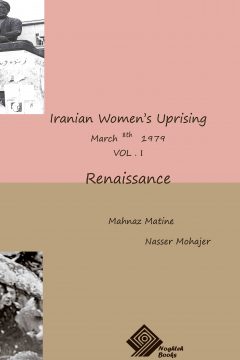
Iranian Women’s Uprising
(Vol. 1 – Renaissance)
This two-volume book is the untold account of the March 8, 1979 peaceful uprising of the Iranian women, pouring into the streets of Tehran protesting against Ayatollah Khomeini’s call for mandatory veiling of Iranian women working in the public sector and educational institutions. This first massive protest movement to the rule of Shiite clergy and the Islamization of Iran, was soon joined by women and also men of six major cities throughout the country and lasted for six days.
The extensive research for this book includes an enormous collection of hundreds of old and newly published magazine articles, newspaper reports written in Persian, English, French and German, video clips, photos, footages and also a few pamphlets and booklets written on the subject. The first volume also contains the testimonies of some of the organizers and participants of this historic uprising who were from all walks of life, such as students, civil servants, academics, lawyers, activists, house wives, nurses, workers and…
ISBN: 978-0-9828408-1-8
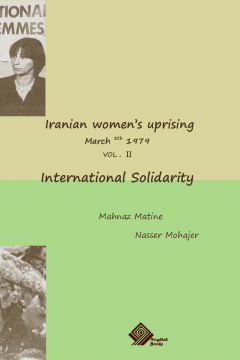 Iranian Women’s Uprising
(Vol. 2 – International Solidarity)
The second volume of Iranian Women’s uprising, archives the extensive international support and solidarity lent to Iranian women in struggle by women’s associations, prominent feminists, and women’s right activists . Hundreds of gatherings and marches were organized in cities like Rome, Milan, Barcelona, New York, Montreal, Vancouver and many others across the world to support the Iranian women’s uprising of March 1979.
The co-editors of these two volumes, Ms. Mahnaz Matine and Mr. Nasser Mohajer have concluded that: “although internationally the uprising enjoyed a great deal of support and solidarity, unfortunately the entire political spectrum in Iran including the liberals, left forces and the centrist individuals and parties did not recognize the importance and potentialities of the uprising, and consequently did not support its sole demand which was to rescind the mandatory Hejab for women and respect for individual liberties.” ISBN: 978-0-9828408-0-1
Iranian Women’s Uprising
(Vol. 1 – Renaissance)
This two-volume book is the untold account of the March 8, 1979 peaceful uprising of the Iranian women, pouring into the streets of Tehran protesting against Ayatollah Khomeini’s call for mandatory veiling of Iranian women working in the public sector and educational institutions. This first massive protest movement to the rule of Shiite clergy and the Islamization of Iran, was soon joined by women and also men of six major cities throughout the country and lasted for six days.
The extensive research for this book includes an enormous collection of hundreds of old and newly published magazine articles, newspaper reports written in Persian, English, French and German, video clips, photos, footages and also a few pamphlets and booklets written on the subject. The first volume also contains the testimonies of some of the organizers and participants of this historic uprising who were from all walks of life, such as students, civil servants, academics, lawyers, activists, house wives, nurses, workers and…. ISBN: 978-0-9828408-1-8
Iranian Women’s Uprising
(Vol. 2 – International Solidarity)
The second volume of Iranian Women’s uprising, archives the extensive international support and solidarity lent to Iranian women in struggle by women’s associations, prominent feminists, and women’s right activists . Hundreds of gatherings and marches were organized in cities like Rome, Milan, Barcelona, New York, Montreal, Vancouver and many others across the world to support the Iranian women’s uprising of March 1979.
The co-editors of these two volumes, Ms. Mahnaz Matine and Mr. Nasser Mohajer have concluded that: “although internationally the uprising enjoyed a great deal of support and solidarity, unfortunately the entire political spectrum in Iran including the liberals, left forces and the centrist individuals and parties did not recognize the importance and potentialities of the uprising, and consequently did not support its sole demand which was to rescind the mandatory Hejab for women and respect for individual liberties.” ISBN: 978-0-9828408-0-1
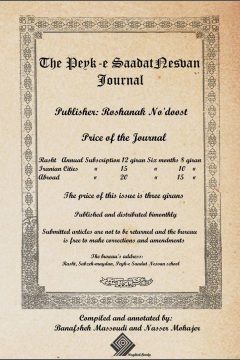 The Peyke Saadat Nesvan (Journal)
The Payk-e Saadat Nesvan Magazine was the first journal published by Iranian women’s rights activists and the first journal produced by left-leaning women in Iran. Its concessioner, Rooshanak Nodoost, was one of the most progressive women of her time whose life story is included in the preface by Banafsheh Massoudi and Nasser Mohajer. She was also the principal of the Saadat Nesvan School in Rasht about which newfound information is included in the 42-page preface.
The Payk-e Saadat Nesvan Magazine was first published in September of 1927, till August of 1928, six issues were distributed in major cities in Iran, reaching women’s rights advocates.
This debut republication of the six issues includes annotations and elucidations by the editors which shed light on hidden aspects of the hundred-year-old history of Iranian women’s struggle for equal rights and human dignity.
ISBN: 978-0-9828408-3-2

 Five young women from one of the provinces in Iran, whose husbands were either imprisoned or executed during the rampant repression of the 1980s, recounted their traumatic experiences with Fariba Iraj. First one on one, and then in a group everyone shared their stories.
The following is what Fariba Iraj says about this innovative and unique approach:
“Aside from two of the women, I didn’t know the rest. I had better say that I had only heard of their names and few things about their lives. For example, I had heard of the hardship that Ladan had to go through in order to visit her husband. She had to travel in extreme heat and cold weather to visit him in one of Tehran’s prisons. On several occasions she was not even allowed to see her husband. I had also heard that she had to endure mistreatments at the hands of prison officials. She would put up with these mistreatments, and would not utter a word. Here and there, I had also heard things about Azadeh that were disturbing. After her husband’s execution, she was being pressured by her mother and father in-laws to marry her brother-in-law. I had heard of stories about her resisting them. Ava’s story was also one of my preoccupations. How she was able to live in hiding with a two-year-old child and escape from one city to another. I wanted to know these women and listen to their stories. I felt that it was their womanhood that made me sensitive to their predicament. I could see that the men around me did not face similar problems, and if they did, they would respond differently.”

 Displaced (Memoir of Exile)
Displaced is basically Ms. Katouzian’s memoirs of life in exile. The chronicle of a known teacher in Tehran and principal of a prestigious girls school of the 1960s and 1970’s, and also the espouse of one of the renowned dissident intellectuals of the time, Ali Asghar Haj Seyed Javadi.
Displaced is indispensable for the understanding of the sorrows and joys, as well as the triumphs and setbacks experienced by Iranian intellectuals who were in the opposition to the emerging theocracy in the early 1980’s and ultimately had to flee their beloved country after the fundamentalist forces decided to extinguish all voices of dissent.
Ms. Katouzian Memoirs of Exile also helps understand the milieu of exiled Iranian intellectuals residing in Paris through- out 1980’s.

 This book represents the late prominent sociologist, Hamed Shahidian’s (1938-1993) reflections on his relationship with a friend and mentor, Toosi Tabatabaei.
It is a compressed impression of exchange of ideas between two thinkers regarding gender relations in Iranian society (past and future). It is a rigorous probe of concepts such as love, literature, revolution, intellectuality and the agency of intellectuals and life in exile.
The book is bilingual (English and Persian).

 Tremblings (Memoir)
Tremblings captures the author’s life experiences in the 80’s and 90’s; But at same time, her life resembles the lives of many women of her generation. A young generation who lived the experience of the 1979 Revolution with immense passion, but soon became disillusioned by the outcome of the Revolution.
In the introduction to the book, the author writes: “I was lost. To find myself, I was knocking on every door. I had to write about me, the person who had been lost … the result is what you see before you. These bits and pieces of writings are based on intuition; the overwhelming issues that I had been apparently grappling with for many years, were yearning for an outlet to be expressed… why this form of expression? How consciously did I select this form? I only know whenever I write a letter, I use the same style.”

 The Inescapable Escape (Thirty Narratives of Fleeing the Islamic Iran)
Book 1
In this two-volume book, thirty men and women of all ages and walks of life with diverse political and religious believes talk about their motivations for fleeing Iran. The protagonists have fled Iran through different borders, seeking asylum in different countries.
The editors and compilers of these amazingly authentic and awakening stories hope to contextualize and pass on the experience of inescapable escape of the older generation to new ones in the hope of preventing historical amnesia and not letting bitter memories and dark days be forgotten.
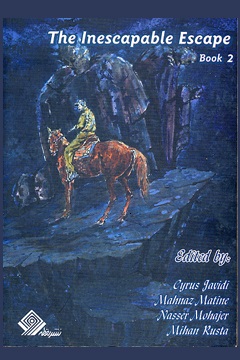 The Inescapable Escape (Thirty Narratives of Fleeing the Islamic Iran)
Book 2
Many left-leaning and non-leftist activists, writers, poets, intelectuals, but also followers of different religious persuasions such as Zoroastrians, Christians, Jews, Bahai’s and those who hoped for freedom and the rule of law had to leave Iran soon after the establishment of the Islamic Republic of Iran. This explains the diverse character of the Iranian Diaspora.
The art work of renowned Iranian Artist, Ario Mashayekhi, depicting moments of displacement has rendered the two volumes of The Inescapable Escape, a rare character.

The Inescapable Escape (Thirty Narratives of Fleeing the Islamic Iran)
Book 1
In this two-volume book, thirty men and women of all ages and walks of life with diverse political and religious believes talk about their motivations for fleeing Iran. The protagonists have fled Iran through different borders, seeking asylum in different countries.
The editors and compilers of these amazingly authentic and awakening stories hope to contextualize and pass on the experience of inescapable escape of the older generation to new ones in the hope of preventing historical amnesia and not letting bitter memories and dark days be forgotten.
The Inescapable Escape (Thirty Narratives of Fleeing the Islamic Iran)
Book 2
Many left-leaning and non-leftist activists, writers, poets, intelectuals, but also followers of different religious persuasions such as Zoroastrians, Christians, Jews, Bahai’s and those who hoped for freedom and the rule of law had to leave Iran soon after the establishment of the Islamic Republic of Iran. This explains the diverse character of the Iranian Diaspora.
The art work of renowned Iranian Artist, Ario Mashayekhi, depicting moments of displacement has rendered the two volumes of The Inescapable Escape, a rare character.


 The Book of Prison (An Anthology of Prison Life in the Islamic Republic of Iran)
Vol. 1
Ketab-e Zendan (“The Book of Prison”) is a collection of two volumes which aims to provide a comprehensive account of the prison system and the experience of incarceration in the Islamic Republic period. From 1979 to the present day, the prison system has been a continuous element in the contention between the state and dissident forces, as well as contrast within the state elites themselves. Nearly all political movements which have been active in Iran during these past four decades have experienced jail as an essential element of their activities and very existence. This experience has been defined by the worst forms of imposition of prison practices, from the extensive use of torture to obtain confessions, through to systematic extra judicial capital punishment, especially in 1981 to 1988. The present compilation seeks, at times starkly, to raise awareness on these issues for a wider Persian audience. Its editor, Nasser Mohajer, is of the belief that the persecution of individuals on political and expression grounds will continue as long as the general awareness of related prison practices will remain limited.
In order to present an authentic record of the prison system in Iran, the narrative is centred on the reminiscences of the prisoners themselves, from all corners of the country. This first volume contain 13 Chapters covering topics such as ●Phases and Stages in the Development of Prison System during the Islamic Republic of Iran period ●Islamic Penitentiary ●Stages and Forms of Arrest ●Interrogators, Interrogation, Types and Mechanisms of Torture ●Renegades and Penitents ●Religious Minorities in the Islamic Penitentiary ●Visitation Procedures and Constraints ●Gender Discrimination ●New born and Prison Children.
The Book of Prison (An Anthology of Prison Life in the Islamic Republic of Iran)
Vol. 2
Nasser Mohajer has opined that “A vital task for those who challenge despotism is to fight against forgetfulness. A cornerstone of Resistance is to resist forgetting which motivated us to record the defiance of tens of thousands who stood face to face with the Islamic Republic and resisted. The Prison Books are a contribution to struggle against collective amnesia.”
In the preface of the second volume of the Book of Prison, Mohajer argues that: “The responsibility of not forgetting the brutalities and atrocities committed by the Islamic Republic rests to a large degree on the shoulders of the generation who has lived the hideous crime. This book retells true stories of those who bravely endured and resisted the Islamic Republic’s imprisonments and brutal tortures.
The narrators come from diverse socio-economic backgrounds and were members and supporters of different political organizations. Some were not political activists and adhered to diverse religious persuasions.”
This Second Volume of the Book of Prison, contains 14 Chapters covering topics such as ●Everyday life inside the Prison ●Psychological Disorders ●Suicides ●Executions: Profiles of 13 executed men and women ●Last Wills and Testaments ●Prison Letters, Escape, 1988 Massacre ●International Human Rights Organizations and the UN ●The activities of organizations of the families of political prisoners ●Freedom: Life After Prison ●Memorials: The Struggle against Forgetfulness.

 The Book of Prison (An Anthology of Prison Life in the Islamic Republic of Iran)
Vol. 2
Nasser Mohajer has opined that “A vital task for those who challenge despotism is to fight against forgetfulness. A cornerstone of Resistance is to resist forgetting which motivated us to record the defiance of tens of thousands who stood face to face with the Islamic Republic and resisted. The Prison Books are a contribution to struggle against collective amnesia.”
In the preface of the second volume of the Book of Prison, Mohajer argues that: “The responsibility of not forgetting the brutalities and atrocities committed by the Islamic Republic rests to a large degree on the shoulders of the generation who has lived the hideous crime. This book retells true stories of those who bravely endured and resisted the Islamic Republic’s imprisonments and brutal tortures.
The narrators come from diverse socio-economic backgrounds and were members and supporters of different political organizations. Some were not political activists and adhered to diverse religious persuasions.”
This Second Volume of the Book of Prison, contains 14 Chapters covering topics such as ●Everyday life inside the Prison ●Psychological Disorders ●Suicides ●Executions: Profiles of 13 executed men and women ●Last Wills and Testaments ●Prison Letters, Escape, 1988 Massacre ●International Human Rights Organizations and the UN ●The activities of organizations of the families of political prisoners ●Freedom: Life After Prison ●Memorials: The Struggle against Forgetfulness.
The Book of Prison (An Anthology of Prison Life in the Islamic Republic of Iran)
Vol. 1
Ketab-e Zendan (“The Book of Prison”) is a collection of two volumes which aims to provide a comprehensive account of the prison system and the experience of incarceration in the Islamic Republic period. From 1979 to the present day, the prison system has been a continuous element in the contention between the state and dissident forces, as well as contrast within the state elites themselves. Nearly all political movements which have been active in Iran during these past four decades have experienced jail as an essential element of their activities and very existence. This experience has been defined by the worst forms of imposition of prison practices, from the extensive use of torture to obtain confessions, through to systematic extra judicial capital punishment, especially in 1981 to 1988. The present compilation seeks, at times starkly, to raise awareness on these issues for a wider Persian audience. Its editor, Nasser Mohajer, is of the belief that the persecution of individuals on political and expression grounds will continue as long as the general awareness of related prison practices will remain limited.
In order to present an authentic record of the prison system in Iran, the narrative is centred on the reminiscences of the prisoners themselves, from all corners of the country. This first volume contain 13 Chapters covering topics such as ●Phases and Stages in the Development of Prison System during the Islamic Republic of Iran period ●Islamic Penitentiary ●Stages and Forms of Arrest ●Interrogators, Interrogation, Types and Mechanisms of Torture ●Renegades and Penitents ●Religious Minorities in the Islamic Penitentiary ●Visitation Procedures and Constraints ●Gender Discrimination ●New born and Prison Children.

 This book is Mohammad Torbati’s memoirs of 50 years of political activity within and without Iran’s Tudeh Party. He joined this pro-Moscow left wing party in the year 1943. He was forced to live underground after the 1953 military coup against the democratic government of Dr. Mohammad Mossadegh.
Torbati escaped Iran for the USSR in 1955. He lived in Ashgabat, Dushanbeh and Moscow until he moved to Prague in 1957. Here he resumed his political activities with the Tudeh party and attended the party’s seventh plenum. But soon after he became disenchanted with the Tudeh Party and upon the party’s 11th plenum in 1965, he took distance from it and focused on academic studies. He graduated from the Academy of Science in 1966 and started working as a researcher at the Prague Economic Institute.
At the time of what is known as the Prague Spring in 1968, he sided with the pro-democracy wing of the communist party and after the suppression of that progressive movement he left both the Communist Party of Czechoslovakia and the Tudeh Party of Iran.
Torbati returned to Iran after the 1979 revolution but could not tolerate the newly established theocracy and soon returned to Prague.
His memoirs is one of the best documentations of the Tudeh Party’s history from the perspective of a low ranking party member.

 Fallen, Aspiring to a Better Tomorrow (With the drawings of Ardeshir Mohases)
This book includes a note by Nasser Mohajer, Saeed Yousef’s long ode, four sketches by the late Ardeshir Mohassess specially made for the ode and finally a few points by the poet.
At the beginning, Nasser Mohajer writes:
“The “Bereft of life, in hope of a fresh start” ode is our prominent poet visit of the Slaughterhouse/Abattoir and his versified elegy for the/that Massacre in a dramatic style.”
“… As readers of this prodigious ode, the first poem about the horrendous Massacre of 1981, we find ourselves at once in the Islamic Republic Prison… and then intimately feel the inside, the mood and ambiance of the Slaughterhouse-Prison. Seeing the henchmen treatment of the Leftist and Mojaahed prisoners; and hearing their conversations, we figure out that each prisoner who was sentenced to death had refused to perform the Islamic Prayer in one way or another… And the climax of the ode is the recount of the will of a young mother who was handed to the death squad right after giving birth to her newborn; she recites to her hope, her baby:
“Do not be sorrowful, I die smiling,
“With happiness and joy, singing,
“Might’ve you seen my execution,
“You’d be awed by my honorable dying…”
 The National Union of Iranian Women (Revisited)
The theme of this book is about the formation and activities of the National Union of Iranian Women, which was founded a few weeks after the 1979 February Revolution of Iran. Most of the founders of NUIW were left-leaning women educated in North America and Western Europe and active in the struggle against the Shah’s dictatorial regime. The NUIW was dissolved after the onslaught of the Islamic Republic on all democratic forces of the country in June 1981.
A detailed report written soon after the dissolution of NUIW by a few of its founding members and expounded by some others, give this book a historical value. The memoirs of several other members and activists of NUIW who responded to the questions and queries of Mahnaz Matine, complement the detailed report. Matine’s comprehensive preface contextualizes the endeavors as well as the negligence of NUIW in the face of a Muslim fundamentalist theocracy determined to marginalize Iranian women and push them back to pre-modern times. The documents she has meticulously collected and incorporated in the last chapter of the book sheds light on the rise and fall of the most militant and avant-garde women’s organization of post-revolutionary Iran.